Why Mojtaba Khamenei Will Likely Be Absent from His Father's Funeral
Ali Khamenei's funeral ceremony will begin shortly.
The funeral ceremony for Ayatollah Ali Khamenei, Iran's second Supreme Leader—who was killed on the first day of the US and Israeli attack in Tehran along with a group of family members and top-tier regime officials—has been scheduled for July 4, 2026 (13 Saratan 1405), after months of delay. Amidst this, the potential absence of Mojtaba Khamenei, as the successor and third Supreme Leader, could be the biggest media and governance challenge of this ceremony.
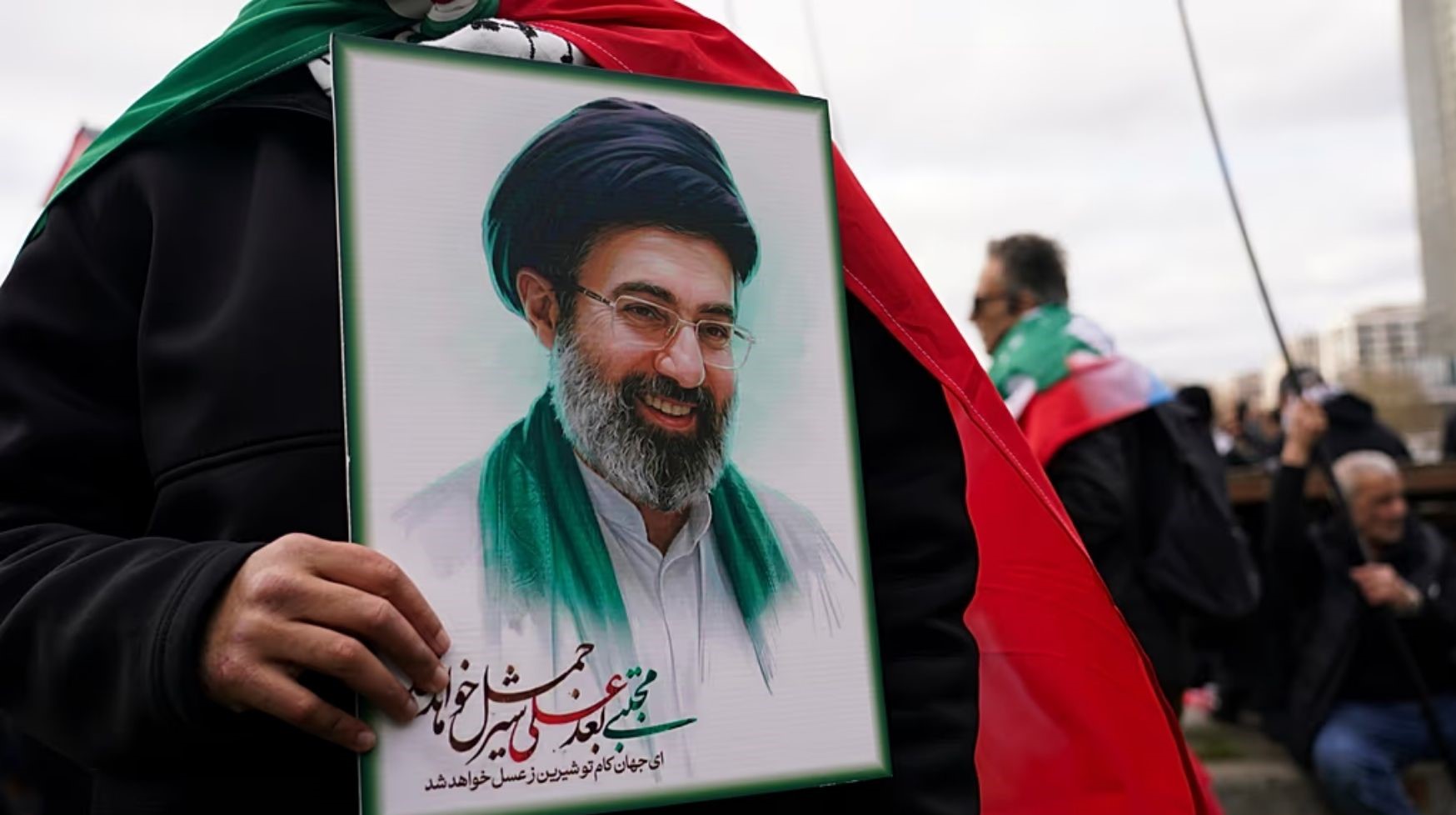
The funeral ceremony for Ayatollah Ali Khamenei, Iran's second Supreme Leader—who was killed on the first day of the US and Israeli attack in Tehran along with a group of family members and top-tier regime officials—has been scheduled for July 4, 2026 (13 Saratan 1405), after months of delay. Amidst this, the potential absence of Mojtaba Khamenei, as the successor and third Supreme Leader, could prove to be the most significant media and governance challenge of this event.
Evidence and available data indicate that it is highly probable he will not be able to make a public appearance at this ceremony. The reasons for this can be summarized in three main areas:
1. Medical Dimensions and the Severe Injury Hypothesis
Aside from exaggerated social media rumors (such as AI-generated images of amputations that lack scientific credibility), his absolute disappearance from the public eye and reliance solely on written messages serves as a strong intelligence indicator.
The realistic scenario is that he sustained severe physical injuries on the first day of the US and Israeli attacks on February 28.
If the sustained injuries have deeply affected his face or mobility, his appearance in front of the high-quality, live cameras of international news agencies would destroy the "image of authority" required for the new leader. Therefore, his medical and security teams prefer to keep him hidden until his treatment is complete.
2. Ultra-High (Red) Security Protocols
The wartime and security conditions that caused the former leader's funeral to be delayed for months are still in effect. A gathering of millions in Tehran, Qom, and Mashhad presents an ideal target for rival intelligence services and drone or missile strikes.
The successor to the leadership is the central pillar of the new power structure. Placing him in an open, uncontrollable environment like the streets of Tehran is a risk that intelligence agencies (such as the IRGC's Vali-ye Amr Protection Corps) are entirely unwilling to accept.
3. Technological and Media Dead-End (Risk of Scandal)
Although his supporters have attempted in the past to symbolize his presence using tools like dummies or simulations, doing so in a live, globally broadcast ceremony is impossible.
Failure of the Body Double or Dummy Scenario: Using a body double or dummy on the vast scale of a public funeral would quickly be exposed by investigative media and facial recognition technologies, resulting in a massive scandal for the new leader's legitimacy. Limitations of Artificial Intelligence: Digitally reconstructing or broadcasting AI-manipulated videos for such a massive ceremony carries a high risk of technical failure and will fail to convince public opinion.
The government will likely justify this major absence under the guise of an "explicit directive from the Supreme National Security Council due to high terrorist threats" in order to prevent the consolidation of rumors regarding his critical condition or death. However, in political discourse, this absence will ultimately be interpreted as a sign of structural weakness and a shaky start to his leadership.
Support independent journalism
Kateb Media keeps its journalism freely available to everyone. If you value our reporting, research and analysis, your support helps us continue investigating important stories, publishing independent voices and making reliable information accessible to readers everywhere.
Even a small contribution helps sustain independent journalism.
If this article informed you, challenged you, or helped you better understand the issue, consider supporting the journalism that made it possible.
Choose an amount to continue.
You will continue to Stripe’s secure payment page. Available payment methods and checkout language are provided by Stripe.
Contributions support Kateb Media’s journalism and publishing work. They are voluntary, do not purchase access to content, and do not give supporters influence over editorial decisions.
Other ways to support